

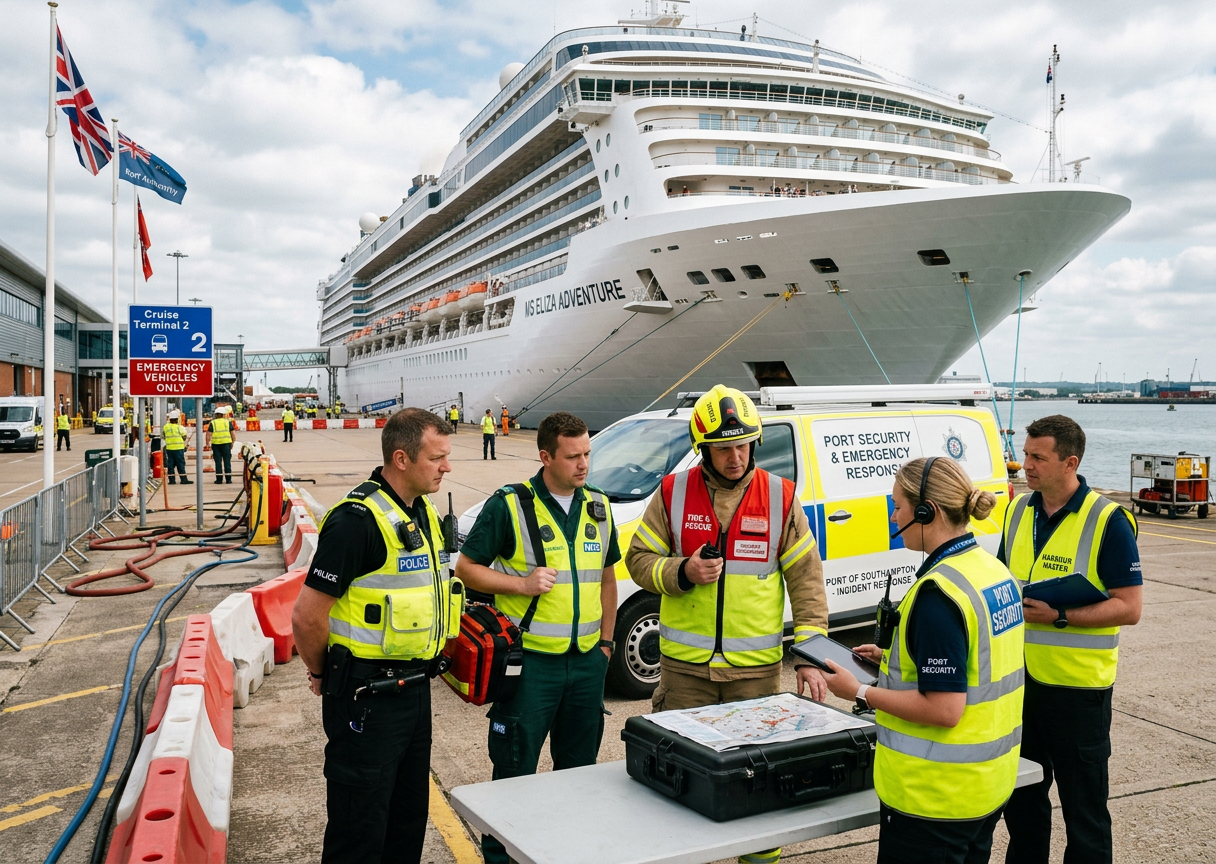
Port safety and emergency teams coordinating on a cruise pier

Industry Development

Safety, Security, Health & Resilience

Protecting guests. Strengthening destinations. Building confidence.

Safe, secure and resilient destinations are essential to successful cruise tourism.

FCCA works with ports, destinations, tourism organizations, public agencies, tour operators and industry partners to strengthen safety, security, health preparedness and destination resilience across the Caribbean and Latin America.

Through industry coordination, training, preparedness initiatives and engagement with FCCA Member Lines, FCCA helps destinations reduce risk, strengthen response capabilities and maintain safe, reliable visitor experiences ashore.

From everyday guest safety to hurricanes, medical emergencies and other disruptions, FCCA supports destinations in preparing for the conditions that can affect cruise operations, local communities and passenger confidence.

Destination Safety & Security

Protect the complete visitor experience ashore.

Cruise guest safety extends beyond the port.

Visitors move through transportation networks, tourism districts, attractions, beaches, shopping areas, restaurants and communities throughout a destination. Effective safety and security therefore require coordination across multiple public and private-sector partners.

FCCA helps destinations strengthen collaboration between cruise lines and local stakeholders responsible for the visitor experience.

Areas of focus may include:

  • Visitor safety and security planning
  • Tourism-area security
  • Law-enforcement coordination
  • Passenger protection
  • Incident response protocols
  • Destination communications
  • Tourism stakeholder coordination
  • Cruise-line information sharing
  • Visitor assistance
  • Risk assessment and mitigation

Landside Operations

Shore Excursion & Transportation Safety

Strengthen safety throughout the landside experience.

Tour operators, attractions and transportation providers play a critical role in delivering safe and reliable cruise experiences.

FCCA supports tourism businesses and destination partners with resources and professional development designed to strengthen operational readiness, safety practices and risk management.

Areas may include:

  • Tour operating procedures
  • Transportation safety
  • Driver and guide preparedness
  • Attraction safety
  • Guest accountability
  • Emergency procedures
  • Incident reporting
  • Insurance and risk management
  • Business continuity
  • Cruise-line operating expectations

These efforts complement FCCA’s broader work in tour operator development, training and cruise-industry readiness.

Ports & Terminals

Port & Terminal Security

Support safe and reliable cruise operations.

Ports and terminals are critical points of connection between ships and destinations.

FCCA works with port authorities, destinations and Member Lines to support coordination around the safe and secure movement of passengers, crew and service providers through cruise facilities.

Areas of focus may include:

  • Terminal security
  • Access control
  • Passenger movement
  • Embarkation and disembarkation
  • Ground transportation areas
  • Port emergency planning
  • Cruise-line coordination
  • Security agency coordination
  • Operational continuity
  • Infrastructure preparedness

Health & Medical Readiness

Prepare destinations to respond when guests and crew need care.

Cruise destinations benefit from clear systems for responding to medical emergencies and public-health events ashore.

FCCA can help bring together cruise lines, ports, health authorities, emergency responders and destination partners to strengthen coordination and preparedness.

Areas may include:

  • Emergency medical response
  • Ambulance and transport coordination
  • Hospital and clinical capacity
  • Passenger and crew medical needs
  • Public-health coordination
  • Infectious disease preparedness
  • Emergency communications
  • Medical referral protocols
  • Cruise-line coordination
  • Continuity of visitor services

The objective is not to replace local health authorities, but to help ensure that the cruise and destination systems can work effectively together when needed.

Emergency Preparedness & Disaster Response

Prepare before disruption occurs.

Cruise destinations throughout the Caribbean and Latin America operate in environments where severe weather, hurricanes, flooding, earthquakes, infrastructure failures and other disruptions can affect tourism operations.

Prepared destinations are better positioned to protect residents and visitors, communicate with cruise lines and restore tourism activity when conditions allow.

FCCA can support destination preparedness through:

  • Emergency planning
  • Hurricane preparedness
  • Severe-weather protocols
  • Evacuation planning
  • Port and tourism continuity planning
  • Stakeholder communications
  • Cruise-line coordination
  • Emergency exercises
  • Recovery planning
  • Post-event assessments

Destination Resilience

Build destinations that can adapt, recover and continue serving visitors.

Resilience is the ability of a destination to prepare for disruption, respond effectively and recover while protecting the long-term strength of its visitor economy.

FCCA works with industry and destination partners to encourage resilience planning across ports, tourism infrastructure, transportation, businesses and visitor services.

Areas may include:

  • Business continuity
  • Infrastructure resilience
  • Emergency communications
  • Tourism recovery planning
  • Supplier and operator preparedness
  • Transportation continuity
  • Port reopening coordination
  • Visitor-service restoration
  • Community recovery
  • Long-term risk reduction

Resilience also means learning from disruptions and strengthening systems before the next event occurs.

Crisis Communications & Destination Confidence

Communicate clearly when conditions change.

During an incident, accurate and timely information can be as important as the physical response itself.

FCCA can help strengthen communication between destinations and cruise lines so that operational decisions are informed by current conditions and appropriate local authorities.

Effective coordination can help destinations:

  • Provide verified information to cruise partners
  • Communicate operational conditions
  • Coordinate response messaging
  • Address outdated or incomplete information
  • Support passenger confidence
  • Inform itinerary and operational decisions
  • Communicate reopening and recovery progress

For destinations, this is particularly important when broader perceptions do not fully reflect conditions in tourism areas or cruise operations.

Training, Exercises & Preparedness Programs

Turn plans into capability.

Preparedness depends on people knowing what to do before an incident occurs.

FCCA can work with destinations and industry partners to support practical training and preparedness programs for tourism professionals, operators, ports and public agencies.

Programs may include:

  • Safety workshops
  • Security briefings
  • Emergency-response training
  • Tabletop exercises
  • Destination simulations
  • Operator risk-management training
  • Crisis communications workshops
  • Business-continuity planning
  • Cross-agency coordination exercises
  • Post-exercise reviews

Programs can be tailored to the needs and risk environment of individual destinations.

Research, Intelligence & Best Practices

Use better information to strengthen preparedness.

Safety and resilience decisions should be informed by evidence, operational experience and lessons from across the region.

Through FCCA Research & Intelligence, destinations and industry partners can access and develop resources related to:

  • Destination risk
  • Emergency preparedness
  • Tourism resilience
  • Visitor safety
  • Operational disruptions
  • Recovery performance
  • Regional best practices
  • Case studies
  • Destination assessments
  • Industry guidance

Research can also support customized assessments and preparedness planning for individual destinations.

How FCCA Supports Safer, More Resilient Destinations

  1. 01

    Assess

    Identify vulnerabilities, capabilities and areas for improvement.

  2. 02

    Prepare

    Develop plans, protocols and partnerships before disruption occurs.

  3. 03

    Train

    Build the skills of tourism professionals, operators and destination teams.

  4. 04

    Coordinate

    Connect cruise lines with ports, public agencies and tourism stakeholders.

  5. 05

    Respond

    Support clear communication and coordinated action during incidents.

  6. 06

    Recover

    Help destinations restore confidence, visitor services and tourism activity.

Strengthen Destination Readiness

Safety, security, health preparedness and resilience are integral to destination competitiveness and the long-term success of cruise tourism.

FCCA works with cruise lines, ports, destinations and local partners to strengthen preparedness across the complete shoreside visitor experience—from the terminal and transportation network to tours, attractions, communities and emergency-response systems.